
Last updated on October 30th, 2026 at 08:41 pm
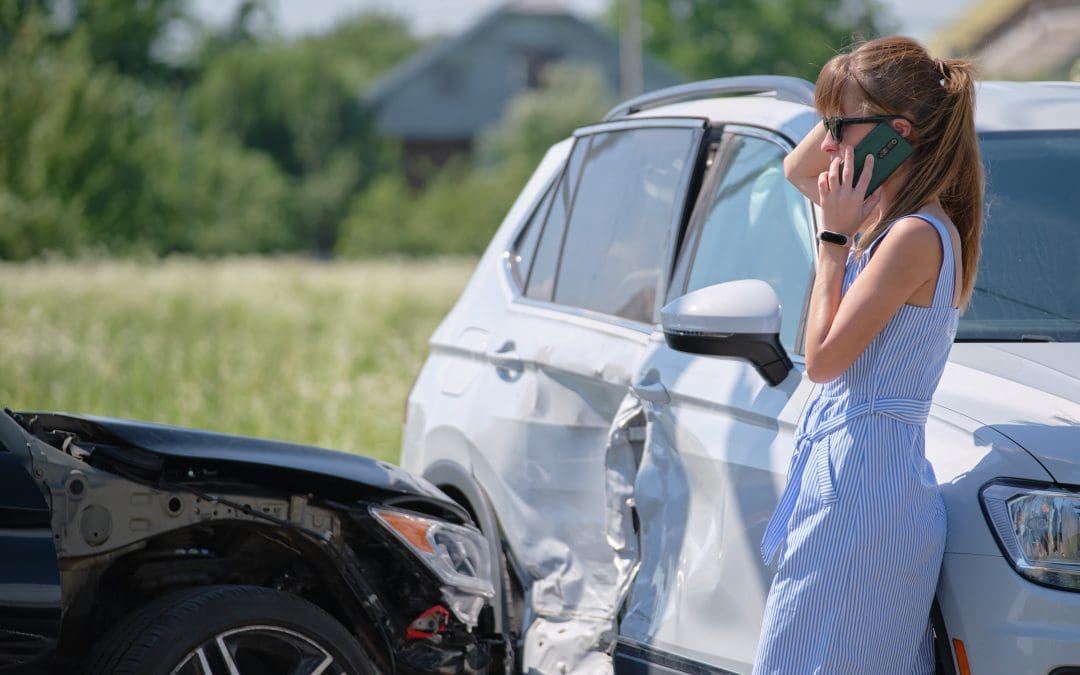
You were driving home on I-5 near Everett when traffic stopped, but the car behind you didn’t. Now your neck is stiff, your car is in a body shop, and an adjuster you have never met wants a recorded statement by Friday. You have a dozen questions and no clear place to start.
Bills are arriving, you may be missing work, and you need to know which insurance pays for what. Underneath that is a feeling of being off balance, as if everyone else in the process already knows the rules. You didn’t choose to be in this crash, yet you’re the one learning a claims system on the fly while you heal.
Most Washington car accident claims turn on a few early steps: getting medical care, preserving evidence, and knowing which coverage applies. Washington uses pure comparative fault, so you can recover even if you were partly at fault, and you generally have three years from the crash to file a lawsuit.
We talk with people in your position every week, and we know how disorienting the first days after a crash can feel. This guide takes the process in the order you will face it. Anderson Hunter has practiced in Snohomish County since 1893, and our attorneys handle injury claims for injured people and for insured drivers alike. That second side of the work helps you, because Anderson Hunter has seen how an adjuster builds a file from the inside.
What Should You Do at the Scene of a Car Accident in Washington?
Your first job is safety; your second is evidence. What you do in the first hour shapes the facts your claim will rest on months later. If you can, work through these steps in order.
- Get safe and call 911 if anyone is hurt. Turn on your hazard lights and move to the shoulder if your car can be driven safely. If it can’t, stay buckled in and wait for help.
- Meet your legal duties at the scene. Under RCW 46.52.020, a driver in a crash involving injury must stop, give their name, address, insurance company, policy number, and license plate number, show their driver’s license, and offer reasonable help to anyone injured.
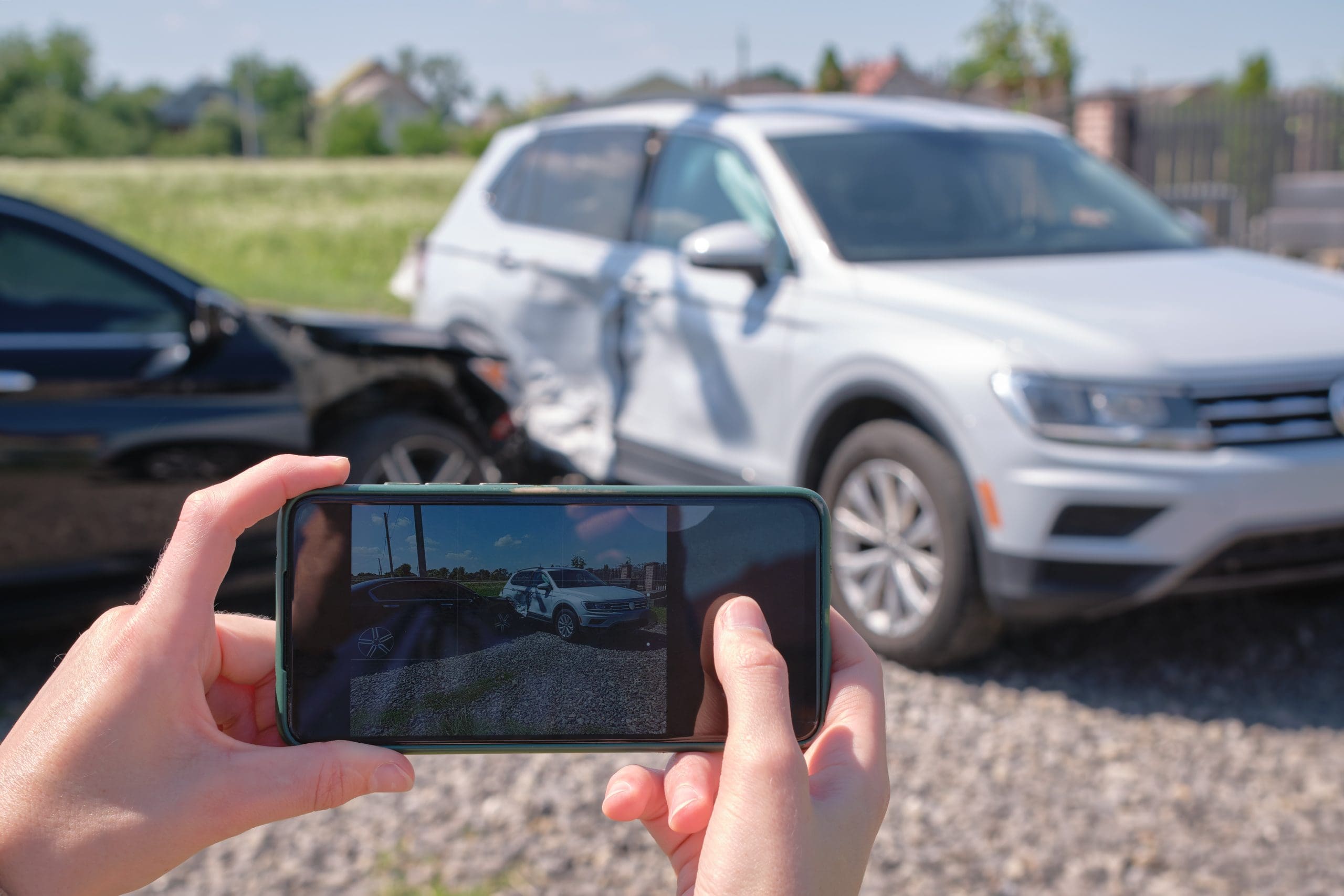
- Photograph everything before it moves. Take wide shots of the intersection or roadway, close shots of each vehicle, skid marks, debris, traffic signals, weather, and any visible injuries. Your phone timestamps every image.
- Collect names and contact information. Get the other driver’s information and the names and phone numbers of any witnesses. Witnesses leave quickly, and they are hard to find later.
- Keep your statements factual. Describe what happened without guessing or apologizing. “I didn’t see him” can be heard as an admission even when the other driver ran a red light.
- File a collision report if police did not. If no officer took a report, Washington requires you to file one within four days when the crash caused injury, death, or at least $1,000 in property damage (RCW 46.52.030 and WAC 446-85-010).
If an ambulance took you from the scene, don’t worry about the photos. Ask a friend or family member to photograph the vehicles at the tow yard, and request the police report number from the responding agency, whether that is Everett Police, the Snohomish County Sheriff’s Office, or the Washington State Patrol.
Why Should You See a Doctor Within 48 Hours, Even If You Feel Fine?
You should get a medical evaluation within a day or two of the crash, even if you feel mostly fine. Adrenaline masks pain. Whiplash (a soft tissue injury to the neck from sudden back-and-forth motion), concussions, and back injuries often show up a day or more later, when stiffness and headaches set in.
Your medical records also become the backbone of your claim. An insurer reviewing your file will look at when you first sought care. A two-week gap between the crash and your first doctor visit invites a simple question: did something else cause this?
- Go to urgent care, your primary doctor, or the emergency room. Tell the provider you were in a car accident and describe every symptom, even minor ones.
- Follow the treatment plan. A string of missed physical therapy appointments hands the insurer an easy reason to question the injury.
- Keep a short recovery journal: pain levels, sleep, missed work, the things you cannot do yet. Two lines a day is enough.
- Save every receipt, including prescriptions and the mileage you drive to appointments.

How Does Washington Decide Who Is at Fault?
Washington is a fault state, which means the driver who caused the crash (and that driver's insurer) is responsible for the harm. But fault is rarely all or nothing. Washington splits it by percentage.
What is pure comparative negligence? Under RCW 4.22.005, your own share of fault reduces your recovery by that percentage, but it does not bar you from recovering. Even if you were mostly at fault, you can still recover the share of your damages caused by the other driver.
Here is how the math works. Say a driver turns left in front of you, but you were going a few miles over the limit. If your damages total $50,000 and you are found 20 percent at fault, your recovery is reduced by 20 percent, to $40,000. A few states bar recovery if you share any fault at all, and many others cut you off at 50 or 51 percent. Washington has no cutoff.
Evidence decides fault, not whoever sounded most certain at the scene. The facts that usually matter most include:
- The police or collision report, including any citations issued
- Photos and video of the scene, vehicle damage, and road conditions
- Witness statements taken soon after the crash
- Dashcam footage or nearby business and traffic cameras
- Vehicle data, such as speed and braking information, in more serious cases
Adjusters assign fault percentages during the claim, and their first number is a position. If you disagree with it, the percentage can be challenged with the same evidence listed above.
Which Insurance Coverages Matter After a Crash?
Three coverages do most of the work in a Washington injury claim: your own Personal Injury Protection, the at-fault driver’s liability coverage, and your own underinsured motorist coverage. Each pays at a different time, for different losses.
Personal Injury Protection (PIP)
Washington insurers must offer personal injury protection (PIP), and you can only decline it in writing (RCW 48.22.085). When you have it, the minimum benefits under RCW 48.22.095 are $10,000 for medical and hospital expenses, $2,000 for funeral expenses, up to $10,000 in income continuation (capped at $200 per week), and up to $5,000 for loss of services (also capped at $200 per week). Many policies carry higher limits. PIP is often the fastest money available to you, because it does not wait for a fault decision.
The At-Fault Driver’s Liability Coverage
Liability coverage pays for harm the insured driver causes to others. Washington’s minimum limits under RCW 46.29.090 are $25,000 for injury to one person, $50,000 for injuries to two or more people, and $10,000 for property damage. Those minimums can run out quickly if you have significant medical treatment or time off work.
Underinsured Motorist (UIM) Coverage
UIM coverage on your own policy steps in when the at-fault driver has no insurance, not enough insurance, or cannot be identified (such as in a hit-and-run). Under RCW 48.22.030, insurers must offer it, it defaults to the same limits as your liability coverage, and you can only reject it in writing. You make a UIM claim against your own insurer, but in this situation, your insurer stands in the at-fault driver’s shoes, so the conversation can be just as adversarial.
| PIP | Liability (other driver) | UIM | |
|---|---|---|---|
| Whose policy? | Yours | The at-fault driver's | Yours |
| Does fault matter? | No | Yes | Yes |
| What it pays for | Medical bills, some lost wages, funeral costs | Your injuries, lost income, pain and suffering, property damage | The gap when the at-fault driver has too little or no coverage |
| Washington minimum | $10,000 medical (if purchased) | $25,000 / $50,000 / $10,000 | Matches your liability limits unless rejected in writing |
| When it pays | Early, as bills arrive | After investigation and settlement | After the liability limits are exhausted or unavailable |
This week, pull up your policy’s declarations page (the summary page listing your coverages and limits). Check whether you have PIP and UIM and what the limits are. The Washington Office of the Insurance Commissioner also offers plain-language guides if a term on your policy is unclear.

Injured in a crash in Snohomish County? Anderson Hunter can review your claim and help you understand your coverage and your options. Call (425) 252-5161 or request a consultation online.
How Does a Car Accident Claim Work From Start to Finish?
The length of your claim depends mostly on the length of your medical treatment. A claim for a sprain that heals in eight weeks moves faster than one for a back injury that needs months of therapy, and disputed fault adds time to either. Here is the usual sequence.
- Notify your own insurer. Most policies require prompt notice, so report the basic facts and open a PIP claim if you have the coverage.
- Give your medical providers your PIP claim number so they can bill the insurer directly while the rest of the claim is pending.
- The at-fault driver’s insurer investigates. Washington regulations give it 30 days from notice to finish, unless it explains in writing why it needs more time (WAC 284-30-370).
- You get treatment until you reach maximum medical improvement, the point where your doctors expect no further significant recovery. Settle before then and future care may go unpaid.
- Next comes a demand package. It gathers your records and bills, documents your lost wages, and explains how the injury changed your daily life.
- The parties negotiate. In our experience, most claims resolve here.
- If the claim doesn’t resolve fairly, you can file a lawsuit in Snohomish County Superior Court, as long as you file before the deadline.
Early on, the at-fault driver’s insurer may ask you for a recorded statement or a broad medical authorization. You are generally not required to give the other driver’s insurer a recorded statement, and a blanket records release can open your entire medical history. Pause and get advice before agreeing to either. You can read more about how personal injury settlements are evaluated on our blog.
What Is the Statute of Limitations for a Car Accident in Washington?
In Washington, you generally have three years from the date of the crash to file a lawsuit for personal injuries or property damage. The deadline comes from RCW 4.16.080(2). If you miss it, a court will usually dismiss the case no matter how strong it is.
A few situations change the deadline:
- If a city, county, or other local government vehicle was involved, you must first file a tort claim form with the agency and wait 60 calendar days before suing (RCW 4.96.020). The limitation period pauses during that wait, but the claim form has its own requirements.
- Your own policy may require notice of a PIP or UIM claim much sooner than three years. Read your policy’s conditions section.
- Different rules can apply if a child was hurt or a family member was killed. Get advice early in either case.
Three years sounds like a long time, but evidence fades well before then. Witnesses move and memories blur, and video can be recorded over long before then. For a deeper look, see our post on how personal injury deadlines work.

When Should You Involve a Car Accident Attorney?
Not every crash needs a lawyer. If you had a minor fender bender, no injuries or only brief soreness, and the other insurer is paying your repair bill promptly, you may be able to handle the claim yourself. We would tell you that before taking a case that does not need us.
It is worth talking with an attorney when:
- Your injuries required more than a few weeks of treatment, or your doctor expects lasting effects
- Fault is disputed, or the insurer has assigned you a share of fault you disagree with
- The at-fault driver’s limits look too low and you may need to make a UIM claim
- An insurer is pressing for a recorded statement, a broad medical release, or a quick settlement
- A government vehicle, commercial truck, or rideshare driver was involved
- You are approaching the three-year deadline
If your injuries keep you out of work for a long stretch, other benefits may also come into play, such as Social Security Disability benefits. And if an insurer is simply refusing to pay, our post on what to do when an insurer won’t pay covers your options.
What Happens If You Wait Too Long?
Waiting rarely helps. A late first doctor visit makes the injury easier to question, and security video from a nearby business can be recorded over within days. Miss the three-year deadline and the right to recover is usually gone, no matter how clear the fault was.
How Anderson Hunter Helps Injured Drivers and Passengers
When you call Anderson Hunter, you will talk with an attorney who lives in this community and drives the same stretch of I-5 you do. Anderson Hunter handles personal injury matters for injured people and for insured drivers, so they know what an adjuster looks for in a file and what tends to be missing.
Anderson Hunter is the largest private law firm in Snohomish County and has practiced in Everett for more than 130 years. We review your coverage, organize your medical and wage records, and handle the calls with the insurers. Every case is different, and no attorney can promise a result. You will always know where your claim stands and what comes next.
In the months ahead, your PIP carrier pays the clinic directly and the adjuster calls us, so your evenings go to physical therapy and your family instead of claim forms. Learn more about Anderson Hunter’s personal injury practice.
Frequently Asked Questions
Do I have to report a car accident in Washington?
Yes, in many cases. If police did not take a report, you must file a collision report within four days if the crash caused injury, death, or at least $1,000 in property damage (RCW 46.52.030 and WAC 446-85-010). You should also notify your own insurer promptly, as most policies require it.
Can I still recover if the accident was partly my fault?
Yes. Washington follows pure comparative negligence under RCW 4.22.005, so your share of fault reduces your recovery but does not eliminate it. If you were 30 percent at fault, for example, your damages are reduced by 30 percent.
Does my PIP coverage pay if the other driver caused the crash?
Yes. PIP pays regardless of fault, which is why it is often the first coverage to help with medical bills and lost wages. Your PIP insurer may later seek reimbursement from the at-fault driver’s insurer, but that happens behind the scenes.
Should I give a recorded statement to the other driver’s insurer?
You are generally not required to give the at-fault driver’s insurer a recorded statement. Your own policy may require you to cooperate with your insurer, which is different. If you’re unsure, get advice before speaking on the record.
What if the at-fault driver has no insurance?
Your own underinsured motorist (UIM) coverage is designed for this situation, along with hit-and-run crashes. Washington insurers must offer UIM, and it can only be rejected in writing (RCW 48.22.030). Check your declarations page to confirm your limits.
How long do I have to file a car accident claim in Washington?
You generally have three years from the date of the crash to file a lawsuit under RCW 4.16.080(2). Claims against local government agencies require a claim form and a 60-day waiting period first. Insurance policies often set shorter notice deadlines, so act well before the three-year mark.
How much does it cost to talk with a car accident attorney?
Anderson Hunter handles personal injury cases on a contingency fee, which means there is no charge for attorney fees unless there is a recovery. Call (425) 252-5161 to ask about a consultation and how fees would work for your situation.
Explore more personal injury resources on our blog, including our guides to filing deadlines and insurance disputes.